You know what tends to stick with people more than a catchy slogan? A business card that actually looks good. When I started my pressure washing business, I handed out a few rough early versions and got almost nothing back. Once I sorted the design, conversations started turning into callbacks. A well-made card is usually the first physical thing a potential client holds from you, so it’s worth getting right.
Picture this: you’re at a home improvement fair, someone mentions their driveway looks terrible, and you pull out your card. If it looks the part, you’re already ahead. Here are the key elements that make pressure washing business cards worth keeping.
Key Design Features to Include
Your card needs to work hard in a small space. These five things I’d call non-negotiable:
- Logo: Clean and recognizable. Brand recall matters more than you’d think.
- Tagline: One short line that tells people what you do without making them guess.
- Service icons: Small visuals for house washing, driveway cleaning, roof work. People scan before they read.
- Quality cardstock: Flimsy cards get thrown out. A sturdy feel signals that you take the work seriously.
- White space: A cluttered card is a confusing card. Leave room to breathe.
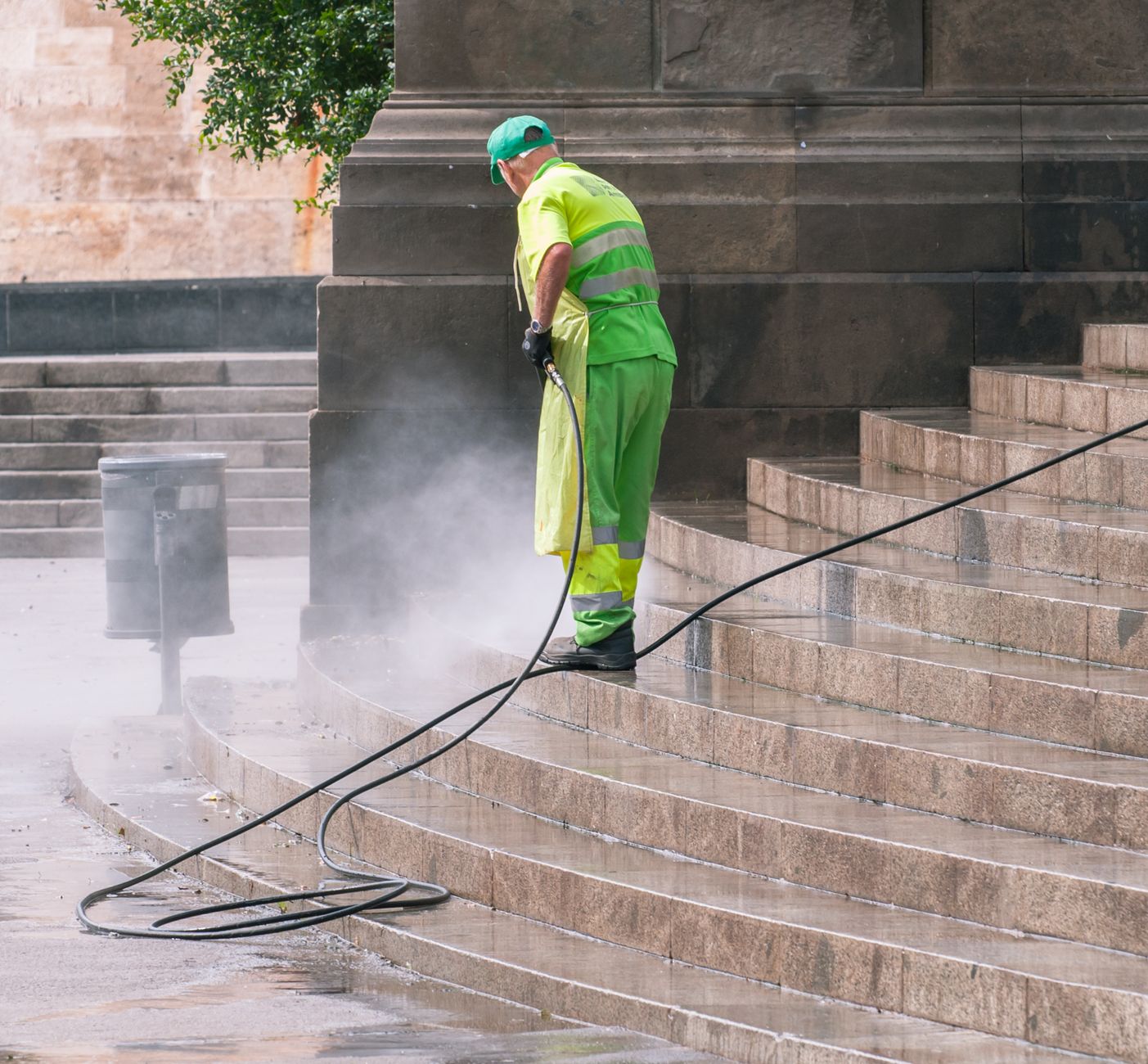
A client of ours had a card printed with a gloss finish and a pressure washer image in action. It kept getting pulled out of the pile at networking events, and that batch alone brought in a handful of jobs.
Cost Considerations for Printing
Printing costs for pressure washing business cards range roughly from $50 to $300, depending on a few things:
- Cardstock weight: Thicker stock costs more but feels noticeably better in hand.
- Print method: Digital printing is cheaper; offset gives sharper results at higher volumes.
- Quantity: Bulk orders drop the per-card price fast.
- Design fees: A freelance designer might run $50 to $150 on top of print costs.
Honestly, budgeting around $100 for 500 professionally printed cards is a reasonable starting point. That’s enough to hand out freely without rationing them, which is exactly the wrong instinct with cards.
Ideal Card Dimensions
Standard business cards run 3.5 x 2 inches, and there’s a reason almost everyone sticks to that size. It fits in wallets, card holders, and the little slots in clipboards contractors carry around. I’ve seen people get creative with taller or square formats, and while they can look sharp, they often get left behind because they don’t fit anywhere convenient. Not worth the risk, in my view.
Essential Information to Convey
Keep it tight. Here’s what a pressure washing business card genuinely needs:
- Your name: Prominent, not buried.
- Business name: The thing people will search for later.
- Services: A short tagline or a two-item list works fine.
- Contact details: Phone, email, website. Add social handles only if you’re actually active there.
- Call to action: Something like “Call for a free quote” gives people a next step.
When I set this up for my own cards, I added a QR code linking to a small portfolio page. Took about an afternoon to put together, and clients mentioned it more than I expected.
Color Psychology in Branding
Color does real work on first impressions, and for pressure washing it’s worth thinking through. Blue reads as trustworthy and calm, which is solid for a service business. Green suggests environmental awareness, a decent angle if you use eco-friendly detergents. Yellow grabs attention but can look cheap if overused. Black tends to look polished and holds up well as a background or text color.
I ran with a green and blue combination, partly because it felt honest to how I wanted to position the business. From what I’ve seen, cards with a clear two-color palette look more intentional than ones that throw in four or five shades.
Pulling the Design Together
Getting all these pieces to coexist without the card looking chaotic is the actual hard part. Less usually wins here: fewer fonts, fewer colors, fewer decorative elements. High-resolution images only, and check that everything aligns before you send the file to print (misalignment is embarrassingly common and not always caught on screen).
Before my final print run, I showed the design to three people who had no stake in it. Two of them flagged the same small issue I’d stopped seeing after staring at it too long. That round of feedback saved me from printing 500 cards with a problem I’d have noticed the moment they arrived.
FAQs
What information should be on a business card?
Include your name, business name, services, and contact details. A short call to action like “Call for a free quote” helps prompt the next step.
How much does it cost to print business cards?
Expect to spend $50 to $300 depending on quantity and cardstock. Around $100 for 500 cards is a workable starting budget.
What size is best for business cards?
3.5 x 2 inches is the standard for good reason. It fits in wallets and card holders, so people actually keep it.

1 Comments